Showing posts with label free will. Show all posts

Wednesday, April 20, 2022

Blog #101 - Questions about the Adjustment Bureau

While we watched the Adjustment Bureau, I had several questions as did many of you. Here were several of them:


1. Who was the Chairman in the film (I know that somebody found info that the director said that the Chairman was a female character in the film)? Did Norris and / or Elise see the Chairman during the film or was it earlier in their lifetimes before the film ever began? (Do you buy my idea that it was the guy that said hi to Norris on the street after the second time Norris and Elise meet?)

2. When Harry said to Elise and Norris that the Chairman rewrote the plan, the book showed a blank space ahead for the two of them.  What do you think that meant?  Does the blank space mean that David and Elise get to forge their own destiny?  Or does it mean something else?  Explain.  And what does this say about the mind of the Chairman, that two humans can change the

3. Kids in past classes have asked why there weren't any female adjusters.  I didn't have an answer for them as to that question.  I have also criticized the film's Western / Euro - centered bias when it talked about giving mankind free will during the Roman times and the Cuban Missile Crisis.  Assess the film in light of these flaws.

Image result for adjustment bureau philosophy

4. Why do you think the filmmaker decided never to show the Chairman in his/her/its true form?  By leaving this question unanswered, what was the filmmaker's intent? 

5. Think about Harry's crisis of conscience when Elise and David broke up for the 3rd time (when he left her at the hospital), and he asked Richardson about the rightness of the plan.  Put yourself in one of the adjusters' shoes and try to make sense of it all when you're only given part of the picture. Does this limited view of the big picture reflect our own view on life in general?  Why or why not?

6. Do you agree with Thompson when he says that "free will is an illusion"?  Why or why not? 

7. What is the filmmaker saying about order and chaos when Thompson tells us about the times when humans had free will and made a complete mess of the world? 

8. Looking at Harry's statement at the end (see below), what do you think is the filmmaker's message? Why?

“Most people live life on the path that we set for them to afraid to explore any other [path]/ Sometimes, someone like you comes along and knocks down the obstacles that we put in your way. People should realize that free will is a gift that you’ll never know how to use until you fight for it. I think that’s the Chairman’s real point. And maybe one day, we won’t write the plan, you will.”

Wednesday, May 6, 2020

Blog #91 - Thoughts about The Adjustment Bureau

Image result for adjustment bureau philosophy

While we watched the Adjustment Bureau, I had several questions as I'm sure many of you did too. Here were several of them:

1. Who was the Chairman in the film (I know that somebody found info that the director said that the Chairman was a female character in the film)? Did Norris and / or Elise see the Chairman during the film or was it earlier in their lifetimes before the film ever began? (Do you buy my idea that it was the guy that said hi to Norris on the street after the second time Norris and Elise meet?)

2. When Harry said to Elise and Norris that the Chairman rewrote the plan, the book showed a blank space ahead for the two of them.  What do you think that meant?  Does the blank space mean that David and Elise get to forge their own destiny?  Or does it mean something else?  Explain.  And what does this say about the mind of the Chairman, that two humans can change the

3. Kids in past classes have asked why there weren't any female adjusters.  I didn't have an answer for them as to that question.  I have also criticized the film's Western / Euro - centered bias when it talked about giving mankind free will during the Roman times and the Cuban Missile Crisis.  Assess the film in light of these flaws.

Review: The Adjustment Bureau - Slant Magazine

4. Why do you think the filmmaker decided never to show the Chairman in his/her/its true form?  By leaving this question unanswered, what was the filmmaker's intent? 

5. Think about Harry's crisis of conscience when Elise and David broke up for the 3rd time (when he left her at the hospital), and he asked Richardson about the rightness of the plan.  Put yourself in one of the adjusters' shoes and try to make sense of it all when you're only given part of the picture. Does this limited view of the big picture reflect our own view on life in general?  Why or why not?

6. Do you agree with Thompson when he says that "free will is an illusion"?  Why or why not? 

7. What is the filmmaker saying about order and chaos when Thompson tells us about the times when humans had free will and made a complete mess of the world? 

8. Looking at Harry's statement at the end (see below), what do you think is the filmmaker's message? Why?


“Most people live life on the path that we set for them to afraid to explore any other [path]/ Sometimes, someone like you comes along and knocks down the obstacles that we put in your way. People should realize that free will is a gift that you’ll never know how to use until you fight for it. I think that’s the Chairman’s real point. And maybe one day, we won’t write the plan, you will.”

Pick four of these questions and answer them for Friday May 8 by 11:59 pm.  400 words minimum for your total answer.  Thanks. 
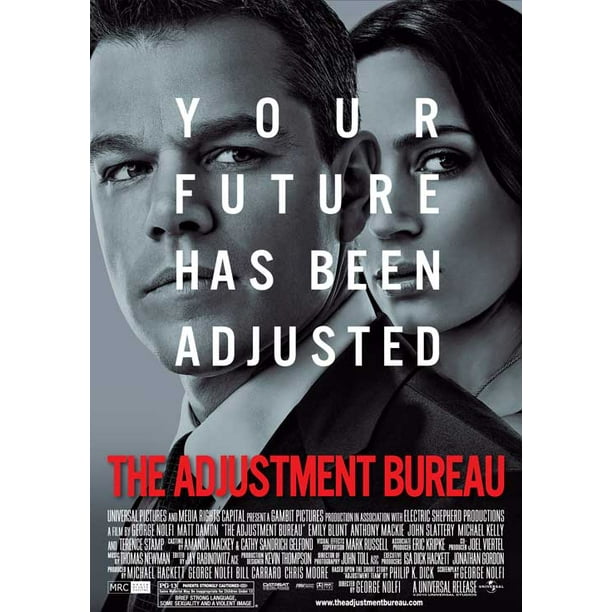
The Adjustment Bureau (2011) 27x40 Movie Poster

Monday, April 27, 2020

Blog #90 - The Problem of Evil


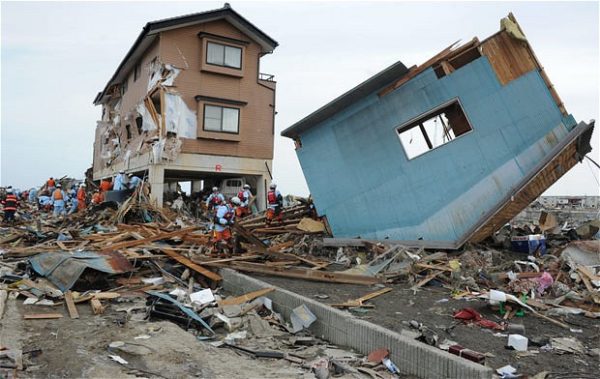
There can be a natural evil - something like a natural disaster (like the 2010 devastating earthquake in Haiti that killed almost 200,000 people and possibly left a million people homeless); diseases like cancer, AIDS, (or yes, I'll say it, COVID - 19); accidents or other things that don't seem to have an intent to do harm but just happen (an agentless cause).Natural Evil – Balenceology Blog
- What about lung cancer?  If lung cancer is caused by someone's smoking habit, then it can be considered evil. The cigarettes themselves, however, cannot be thought of as evil, because they needed to be used in order to become toxic. If a person develops lung cancer b/c he/she lives in a high pollution area and has lived w/ heavy smokers his/her entire life, then the person wouldn't be considered evil. An evil has been done to him/her by another person's free will (the smoker, the polluting company).
- What about the use of the atomic bomb? - Can an object itself be evil w/o an agent to use it? If the atomic bomb was never exploded over a population but used as leverage by the countries that owned them, is that evil?  Does the threat of its use make it evil?  Or is the threat itself evil?  If the bomb is created but never used or even its use threatened, does the bomb cease to be evil?   

Then there are moral evils. These have an agent as the cause or someone or something doing the evil with intent. We tried to break things down to universals - is there a universal evil in every society (like Satan)? Wikipedia broke the nature of moral evil down into 4 groups:

"Views on the nature of evil tend to fall into one of four opposed camps:Moral absolutism holds that good and evil are fixed concepts established by a deity or deities, nature, morality, common sense, or some other source;Amoralism claims that good and evil are meaningless, that there is no moral ingredient in nature;Moral relativism holds that standards of good and evil are only products of local culture, custom, or prejudice;Moral universalism is the attempt to find a compromise between the absolutist sense of morality, and the relativist view; universalism claims that morality is only flexible to a degree, and that what is truly good or evil can be determined by examining what is commonly considered to be evil amongst all humans. Author Sam Harris notes that universal morality can be understood using measurable (i.e. quantifiable) metrics of happiness and suffering, both physical and mental, rooted in how the biology of the brain processes stimuli." 

As discussed in the chapter "Two Cultures", St. Augustine thought that evil was not doing God's will. He also believed that we as humans are born with original sin (because of Adam and Eve's disobedience in the Garden of Eden).  


Then there is the problem of evil - why does it exist at all? This is the school of thought that if God (or any all knowing, all powerful good diety) existed, why would that diety allow evil to exist? If it did allow evil to exist, then is the diety really good and/or all powerful? There are many ways to look at this - see Problem of evil - here - and here - and here - for ideas. Some religious types think that this argument is so corrosive that they devote a lot of energy to debunking it - they think it might lead to atheism.
The Problem of Evil | Life Giving Words of Hope & Encouragement by ...
C.S. Lewis, author of the Chronicles of Narnia, wrote this about his early athiest days:

"My argument against God was that the universe seemed so cruel and unjust. But how had I got this idea of just and unjust? A man does not call a line crooked unless he has some idea of a straight line. What was I comparing this universe with when I called it unjust?... Of course I could have given up my idea of justice by saying it was nothing but a private idea of my own. But if I did that, then my argument against God collapsed too--for the argument depended on saying the world was really unjust, not simply that it did not happen to please my fancies" 

Occam's Razor is an idea credited to 14th Century friar William of Ockham which states that the conclusion based on the fewest assumptions is most likely the right one. 

Questions (pick 3 of 5 questions to answer):
1. Is it better to prevent evil than to promote good when making rules or standards to live by? Why?
2. Do you agree with the problem of evil - that a benevolent, omnipotent diety wouldn't allow evil? Why or why not?
3. Are we making this more complicated than it has to be? Or should we just reduce it to the simplest explanation (Occam's razor - see above)?
4. If we as humans can conceive of evil or evil acts and thoughts, does that mean we are evil by nature? Why or why not?

5. Do you believe that free will is at the root of most evil?  Why or why not?  

Your responses to the questions due by Saturday night, May 2.  400 words for your total answer.  

Thursday, April 18, 2019

Blog #83 - Adjustment Bureau and Fate vs. Free Will

While we watched the Adjustment Bureau, I had several questions as did many of you. Here were several of them:

1. Who was the Chairman in the film (I know that somebody found info that the director said that the Chairman was a female character in the film)? Did Norris and / or Elise see the Chairman during the film or was it earlier in their lifetimes before the film ever began? (Do you buy my idea that it was the guy that said hi to Norris on the street after the second time Norris and Elise meet?)

2. When Harry said to Elise and Norris that the Chairman rewrote the plan, the book showed a blank space ahead for the two of them.  What do you think that meant?  Does the blank space mean that David and Elise get to forge their own destiny?  Or does it mean something else?  Explain.  And what does this say about the mind of the Chairman, that two humans can change the

3. Kids in past classes have asked why there weren't any female adjusters.  I didn't have an answer for them as to that question.  I have also criticized the film's Western / Euro - centered bias when it talked about giving mankind free will during the Roman times and the Cuban Missile Crisis.  Assess the film in light of these flaws.

Image result for adjustment bureau philosophy

4. Why do you think the filmmaker decided never to show the Chairman in his/her/its true form?  By leaving this question unanswered, what was the filmmaker's intent? 

5. Think about Harry's crisis of conscience when Elise and David broke up for the 3rd time (when he left her at the hospital), and he asked Richardson about the rightness of the plan.  Put yourself in one of the adjusters' shoes and try to make sense of it all when you're only given part of the picture. Does this limited view of the big picture reflect our own view on life in general?  Why or why not?

6. Do you agree with Thompson when he says that "free will is an illusion"?  Why or why not? 

7. What is the filmmaker saying about order and chaos when Thompson tells us about the times when humans had free will and made a complete mess of the world? 

8. Looking at Harry's statement at the end (see below), what do you think is the filmmaker's message? Why?

“Most people live life on the path that we set for them to afraid to explore any other [path]/ Sometimes, someone like you comes along and knocks down the obstacles that we put in your way. People should realize that free will is a gift that you’ll never know how to use until you fight for it. I think that’s the Chairman’s real point. And maybe one day, we won’t write the plan, you will.”

Thursday, April 13, 2017

Review for Hellenism, Christianity, Renaissance, and Baroque Test

Review for the Hellenism, Christianity, Renaissance, and Baroque Test - Wednesday, April 19 - https://docs.google.com/document/d/1allQR65am8hNnzFvCZiehgk3qfLaSx5bKsmMobP9LmY/edit?usp=sharing

Crash Course - Anselm and Ontological Argument for God.


Crash Course - Aquinas and the Cosmological Arguments for God


Crash Course - Intelligent Design / Teleological Argument for God


Saturday, April 13, 2013

Blog #61 - Fate and Free Will in the Matrix

After watching The Matrix this semester for what seems the umpteenth time, I was searching for something new to talk about.  This time, as with all good art, we can gather something new from it upon repeat viewings.

My question is: where do you see fate and / or free will in the movie?

Neo seems to disagree with the concept of fate (or the more technical term, determinism) "I don't like to think that I'm not in control of my life."  In fact, he seems to use free will by choosing the blue pill over the red pill when Morpheus gives him the options.

There are other scenes where Morpheus seems to give Neo choices - "I'm just trying to show you the door.  You're the one who has to walk through it" -  right before they go to visit the Oracle.  Morpheus also seems to make the choice to sacrifice himself when the agents attack the group in order to capture Neo.  Also, Neo appears to make the choice to go back into the Matrix to save Morpheus.  Even the Oracle tells Neo, "you don't believe in all that fate crap.  You're in control of your own life."


But, I think that all of these "choices" are fated to happen because of a number of factors, many of which can be traced back to the Oracle's prophecies:
1. Morpheus believes so strongly in the prophecy that he would be the person to find The One that he sacrificed himself to the agents.  "I did what I did because I had to.  I did what I did because I believe that search is over."
2. Neo would have chosen the red pill because of his natural curiosity, his inner determinism, that drove him to find the answers to the questions burrowing in his brain;

3. Trinity, Apoc, Tank and the others of the Nebuchadezzar follow Morpheus wherever he believes they need to go, even if it means their deaths.
4. The Matrix is, in fact, slavery - a contentment program for those who power the machines.  There are no choices to be made b/c the people that live in reality carefully choose those who seem to be discontent with their lives.

Cypher is the only character who has made a choice of free will when he decides to betray Morpheus and Neo.  He has lived in the "real world" for nine years and chooses to go back into the Matrix (though Agent Smith would most likely kill him regardless of the promise), because he feels discontent with Morpheus, his promises, and his need for mindless enjoyment (the steak).

Your question: Agree or disagree with the fate/ free will assertion in The Matrix?  Why?  If you believe that there is some element of free will that I have overlooked, please let me know.

250 words minimum.  Due Tuesday, April 16.  

Friday, December 7, 2012

Blog #54 - Plato's Ideal State - Would it work today?

We've spent a little more time on Plato's ideal society this semester than I have in past semesters; maybe b/c this time around the world seems to be crumbling around us with roiling stock markets and the Big 3 impending collapse. Where better to look than the past when the future looks so bleak, right? Well, maybe we can learn something.

Several criticisms were brought up of this ideal society:

1. Where would the innovation come from if everyone be content? Doesn't innovation come from competition and competition come from peoples' desire to be better?

2. Why do they need soldiers if everyone is content? Is it just for protection from other city-states? Or, did Plato ever intend for this city to exist? If that is the case, why are the soldiers really there?

3. What kind of guarantee is there that the philosophers will rule in everyone's best interests? Is there an impeachment process? Can the peasants overthrow the rulers?

4. In the interests of specialization, what if you get bored with your job? What if you don't want that job? What if that job that you do best is NOT something you love doing? To use an example from 4th hour, I might do math really well, but that doesn't mean I want to be an accountant.

5. Is there no social mobility? What if we don't like the class that we're born into?


This link http://www.philosophypages.com/hy/2g.htm gives a good, brief synopsis of the first four books of the Republic in which this society is described. I have countered many of these arguments in a devil's advocate style by appealing to one of Socrates' universal questions - courage, justice, virtue, wisdom, moderation, beauty.

The question before you is: Can Plato's society be fixed to make it more ideal to fit a 21st century American audience? Why or why not?

Things to ponder while answering this question: Is Plato's society so incompatible with American ideals and tastes and traditions that it cannot be fixed?  Can Plato's society work for people of another country? What would you have to fix in order for it to work in America? Could it work on a national or state level or could it only work on a small scale? If it only works on a small scale, what's the use?
 - Also, are Americans too individualistic to give up some of our freedoms or luxuries for the greater good of society.  This will be a topic - the greater good vs. the desires of the individual - as we go on through the semester.  

250 word minimum response.  Due Thursday, Dec. 13 by class time.

Also, new philosophy books in our school media center:


Enjoy!

Tuesday, October 4, 2011

Blog #50 - The Adjustment Bureau


***DANGER - SPOILER ALERT - If you haven't seen The Adjustment Bureau but still want to, do not read any further. 


While we watched the Adjustment Bureau, I had several questions as did many of you. Here were a few of them:
1. Who was the Chairman? Did Norris and / or Elise see the Chairman during the film or was it earlier in their lifetimes before the film ever began?
2. When Harry said to Elise and Norris that the Chairman rewrote the plan, the book showed a blank space ahead for the two of them.  What do you think that meant? 
3. Alexis and Cheyenne asked why there weren't any female adjusters.  I didn't have an answer for them as to that question.  I also criticized the film's Western / Euro - centered bias when it talked about giving mankind free will during the Roman times and the Cuban Missile Crisis.  Assess the film in light of these flaws. 
4. Is Harry the Chairman?  Why or why not? 
5. Think about Harry's crisis of conscience when Elise and David broke up for the 3rd time (when he left her at the hospital), and he asked Richardson about the rightness of the plan.  Put yourself in one of the adjusters' shoes and try to make sense of it all when you're only given part of the picture. 
6. Looking at Harry's statement at the end (see below), what do you think is the filmmaker's message? Why?

“Most people live life on the path that we set for them to afraid to explore any other [path]/ Sometimes, someone like you comes along and knocks down the obstacles that we put in your way. People should realize that free will is a gift that you’ll never know how to use until you fight for it. I think that’s the Chairman’s real point. And maybe one day, we won’t write the plan, you will.”
Pick two of these questions and answer them for tomorrow, Wednesday, Oct. 5 before class begins. 
250 word minimum.  Thanks. 

Monday, September 19, 2011

Blog #49 -Source Code blog has arrived

*******SPOILER ALERT ******* IF YOU HAVEN'T SEEN THE FILM, DON'T READ.

We talked a lot about the film, Source Code, and how it relates to Plato's Allegory of the Cave.  I don't know if it's a perfect fit, but what is?  I think further research is needed for this topic and if you guys can find it pertaining to the film and Plato, that would be great (don't forget to read the illustrated handout for more details). 

The film opens up some questions about fate that I don't think it really answered or that we really touched upon too much.  When Capt. Stevens kept being pulled out of the SC and back into his "capsule," he saw these glimpses - call them deja vu, precognition, whatever - of himself and Christina at Chicago's Millenium Park and the big chrome bean.  These scenes occurred even before he felt like saving anybody on the train or understood his situation - as if he was headed towards that future "alternate universe" no matter happened.  Could it be that every obstacle that Stevens ran into (or literally ran into him - see below!) kept him moving towards that inexorable future? 


What about the morality of using Capt. Stevens as a lab rat for the Source Code?  It's obvious by the end of the movie that he's in a terrible state of physical trauma, and that only his mind is the most complete and functioning part of him.  At points in the film, it appeared that Dr. Rutledge was "torturing" Stevens by sending him back into the memories of Sean Fentress only to be blown up again and again.  We did mention that Capt. Stevens, as a member of the U.S. military, most likely, had signed away his rights to do with his remains as his parents wished.  However, it is hard to imagine a father wishing this for his son.  And by the end of the film, if it has reset and everything starts anew, Capt. Stevens will continue to be used further in the GWOT (global war on terror). 

Lastly, how do you explain the ending?  Goodwin and Rutledge have no knowledge of the previous day's events (if those events even occurred - but they had to have existed somewhere, b/c Stevens sent her the email - it came from somewhere, sometime, right?).  And at the end of the movie, it looked as if the whole day had been reset, Capt. Stevens was alive and in his previous "state of being," in addition to the bomber being caught and the initial train bombing never having occurred. 

Questions to choose from:
1. How could the filmmakers have changed the film to make it more or less like Plato's cave?  Explain your reasoning. 
2.  What role did fate play in this movie?  Why?  Or, did fate play no role at all and why not? 
3.  Did the military cross the line with the use of Capt. Stevens' body and mind for the Source Code?  Why or why not? 
4.  Is the ending a new "movie reality" (for lack of a better term)?  Why or why not?  Is it possible that Stevens' determination somehow merged the alternate universe with the movie's original reality? 
  

Pick one of the following questions and answer it as fully as you can.  Stay in the nuances of the question as long as you can.  Your response should be a minimum of 250 words and is due Wednesday, Sept. 21 before class begins. 

Online articles to check out if you have time:
"Here I Am: The Identity Philosophy of SC" - http://www.filmschoolrejects.com/opinions/here-i-am-the-identity-philosophy-of-source-code.php
"Who is Sean Fentress?: A (Completely Serious) Exploration of What Happened After the End of Source Code" - http://www.filmschoolrejects.com/opinions/what-happened-after-the-ending-of-source-code.php 

Saturday, February 20, 2010

Blog #35 - Do It Yourself - Ask the Nagging Question

This one will be a little bit easier for me and a little bit harder for you. I've got 6 pm rehearsals this week in Ypsilanti w/ 1.5 hr drives there and back. It's going to be a long week. But after Feb. 28, life should return back to normal.


I am asking you to pick a topic/concept from any time during the semester that still puzzles you, baffles or confounds you, or something that just doesn't satisfy you. It could be a new take / angle on something that we've already discussed (b/c I know sometimes when you get a chance to stop and think about things we've discussed, it might 2 or 3 days later). Maybe you saw a movie that had some philosophical concepts - share it. For instance, I saw the movies 9 and Moon over break. Both had some wide ranging themes that we've talked about - what is a soul?; Man vs. machine; the right type of government; what does it mean to be human? Also, if you get a chance to see Creation, discuss what you saw or ask a question about the movie.

Due Monday, March 1 - 200 words.

Pick one of the questions below and answer it. Please do not pick your own.
1. Is being a Sunday Christian morally wrong or unjust in any ways? - Armen


2. Is the world “all in our heads?” How do you know? Will anyone ever know? If you realized you were living in a dream, would you jump off a cliff to see if you could wake up? - Jake P.


3. If you were given a timeline/future history of your life to come would you ignore it or take it into consideration throughout the rest of your life mapped out? If you would ignore, why? If you take it in, would you try and change things throughout your life knowing what's coming? Or is the future inevitable and can't be changed? Why? - Marcus


4. From Emily Wilson's ten criticisms of Socrates, ranging from the "chatter-box" to the rationalist thinking, which do you think is the worst criticism he has brought on to himself? (what is the #1 thing wrong with Socrates) - Armen


5. Who do you believe is the evil genius is our society/world? - Bianca, Stefanos


6. When God created Adam and Eve, he gave them free will, allowing Adam (and Eve) to sin. In heaven, there is supposed to be no sin, pain, sadness - everything is supposed to be perfect. Does this mean that there is no freedom in heaven? - Jules


7. When we talk about evil/wrong/bad in class, we talk about murder or nuclear bombs or diseases, but I don't think we have ever talked about whether some things are only a little bad, or if one thing is more wrong than another. Is there more than one degree of evil/bad? Can something be percieved as only a little evil/bad? For example, some people believe that smoking marijuana is bad, just like killing someone is bad. Could "bad" have more than one definition? - Olivia

8. Is your generation going to be different than previous ones? Will your generation change the world? If yes (to either), how so? How will your upbringing play a role in your generation’s actions? Is the generation headed in the right direction? - Jake P.


9. How come religion was such an important part of people’s lives a few centuries ago and is now “less important”? Do people have more doubt? Or is there something else? - Laetitia


10. Is death the end of everything or is there a soul that continues to exist after death? If so, is the soul immortal? - Sam T., Ben


11. Technology and other scientifical advantages seem to further divide religion and science. One example is Darwinism/evolution. What is another example that we may or may not have studied? - Sammy V., Stephen


12. How can you be sure that you are real and the people around you are real, if you can't trust your senses? - Irina, Jake P., Stefanos, Raphy


13. If you argue that man has no soul, what makes man want to be kind and love others?; If you argue man has a soul, where in the body is it? Does it have a place in the heart or in the mind? Maybe in the foot...? - Dayna


14. Do you believe that history could truly be manipulated like it was in George Orwell's 1984? - Jules


15. Spinoza’s philosophy claims that our world is deus sive natura, or “either Nature or God”, but how can it possibly be a question of either? It seems to me that either both exist, or neither exists. If only God exists, then he is malevolent in making a false nature that we perceive, and if only nature exists, then how could it have been created? - Claire

16. If we do, in fact, come into this world with “tabula rasa” do you think that eventually everyone ends up with the same general concepts on their slate or is what ends up on the slate determined by the individual? - Jessie


17. Given the recent intentional plane crash of an angry man into an IRS building (that killed one IRS agent) in Austin, TX, should the definition of a terrorist be redefined? In your own words what is a terrorist? Do you think the definition of terrorist changed over time? And what separates a terrorist from a freedom fighter or a martyr? - Moose


18. Which era do you believe was most significant in coming up with discoveries and ideas? (Rationalism, Empiricism, Enlightenment, or Romanticism?) - Stefanos


19. At what point does life end? At what point does life begin? If we define life as ending when the heart stops, then should we define life as beginning when the heart begins to beat or when the child is born? If we define life as beginning with the first heartbeat, is it ridiculous to label the mother a murderer during a stillbirth or would that be total heresy? - Eric S.


20. Is philosophy a waste of time since the meaning of life cannot truly be found? - Dayna

21. What makes someone a “philosopher?” Is it a way of thinking? Does it require a certain level of intelligence or understanding? Or is it something anyone is capable of doing if they truly set their mind to it? - Jessie

22. How have movies, especially horror and mystery movies, influenced our perception of reality? Have movies sometimes made you question reality and made you think about whether things are real or not? - Richard


23. Is dialectic materialism a circle? Since I saw the timeline of cultures affected by each other on our Marxism notes I have wondered if the process is linear. There has to be a limited amount of ideas so they would have to repeat themselves once in a while, but perhaps the amount is so vast that that is not possible. Or does it have an end like Marx says at which Communism is the end point? - Claire


24. What makes us think we can trust our senses? Explain. - Richard, Jake T.


25. Why is Darwin being placed in a philosophy book with men that pondered where we came from and questions that can’t be answered while his theories are based off of data and facts? - Lisa


26. Have the philosophers discussed in class changed your views on life at all? How so? - Megan


27. Do you believe that each person has one true love that they are destined to find, or that there are multiple true loves for each person? - Sara D.


28. Do people need to have faith in a higher power, or anything for that matter, to be successful in life? - Amanda

29. Society has many laws, rules, regulations, and consequences for those who don't follow them. Do you think that people derive the sense of right and wrong from these laws, rules, regulations, and consequences, or sentiment and feelings that Hume suggest? - Raphy


30. Would you drink the cool-aide? If someone presented you with a drink that could make you meet the eternal god and, guarantee you passage into heaven, would you drink it? It’s like would you press the button for a million dollars? Can we believe what we hear, do we hear the truth, or do we inherently believe what we want to hear? - Eric S.


31. The author of Sophie’s World appears to have a fanatic obsession with romantic irony. The fact that he is constantly reminding us every chapter about how he is in fact simply writing a book about a man who is writing a book about characters that may actually exist in the fantasy world that he (the author) has created proves this statement. My question is, why has the author gone to such great lengths with his use of romantic irony? What does it achieve for the novel? - Tyler F.


32. Do you believe the theory of evolution disproves the existence of God or does God and Darwin's theory of evolution go hand in hand? - Stephen


33. Was G-d or a higher power created in man's image? Why or why not? - Amanda


34. Communism has never been achieved in any country. Do you think that it’s the actual process/idea of communism that is flawed or the nature of mankind that is flawed that prevents the idea from working? - Annie, Tyler F.


35. Can there be perfection outside of situations in which there is a clear definition of what it means to be perfect? i.e. Bowling the perfect game - 300! - Sam G.


36. Do you believe that the average American is intelligent? - Jake T.
37. Freud said that "we have unconscious drives that can affect our actions without us knowing about them." Do you agree or disagree? Why or why not? - Alesia
38. Can anything be infinite? (you have an infinite number of numbers between 1 and 2, and an infinite number of numbers between 2 and 4. are there twice as many numbers between 2 and 4 than there is between 1 and 2??) Why or why not? - it doesn't even have to apply to numbers. - Ben


39. If you assume that the universe is expanding, do you believe that it is expanding into something? Why or why not? - David M.
40. Does the idea of hell or a punishment seem reasonable with a just God? Why or why not? - Colin
41. As humans we are so needy, in this day and age technology is at all time high. Do you think people like Amish people have an advantage even though they are without, them being less depend it on the things we consider a necessity. Why or why not? - Alyssa T.