This one will be a little bit easier for me and a little bit harder for you. I've got 6 pm rehearsals this week in Ypsilanti w/ 1.5 hr drives there and back. It's going to be a long week. But after Feb. 28, life should return back to normal.
I am asking you to pick a topic/concept from any time during the semester that still puzzles you, baffles or confounds you, or something that just doesn't satisfy you. It could be a new take / angle on something that we've already discussed (b/c I know sometimes when you get a chance to stop and think about things we've discussed, it might 2 or 3 days later). Maybe you saw a movie that had some philosophical concepts - share it. For instance, I saw the movies
 9
9 and
Moon over break. Both had some wide ranging themes that we've talked about - what is a soul?; Man vs. machine; the right type of government; what does it mean to be human? Also, if you get a chance to see
Creation, discuss what you saw or ask a question about the movie.
Due Monday, March 1 - 200 words.
Pick one of the questions below and answer it. Please do not pick your own.
1. Is being a Sunday Christian morally wrong or unjust in any ways? - Armen
2. Is the world “all in our heads?” How do you know? Will anyone ever know? If you realized you were living in a dream, would you jump off a cliff to see if you could wake up? - Jake P.
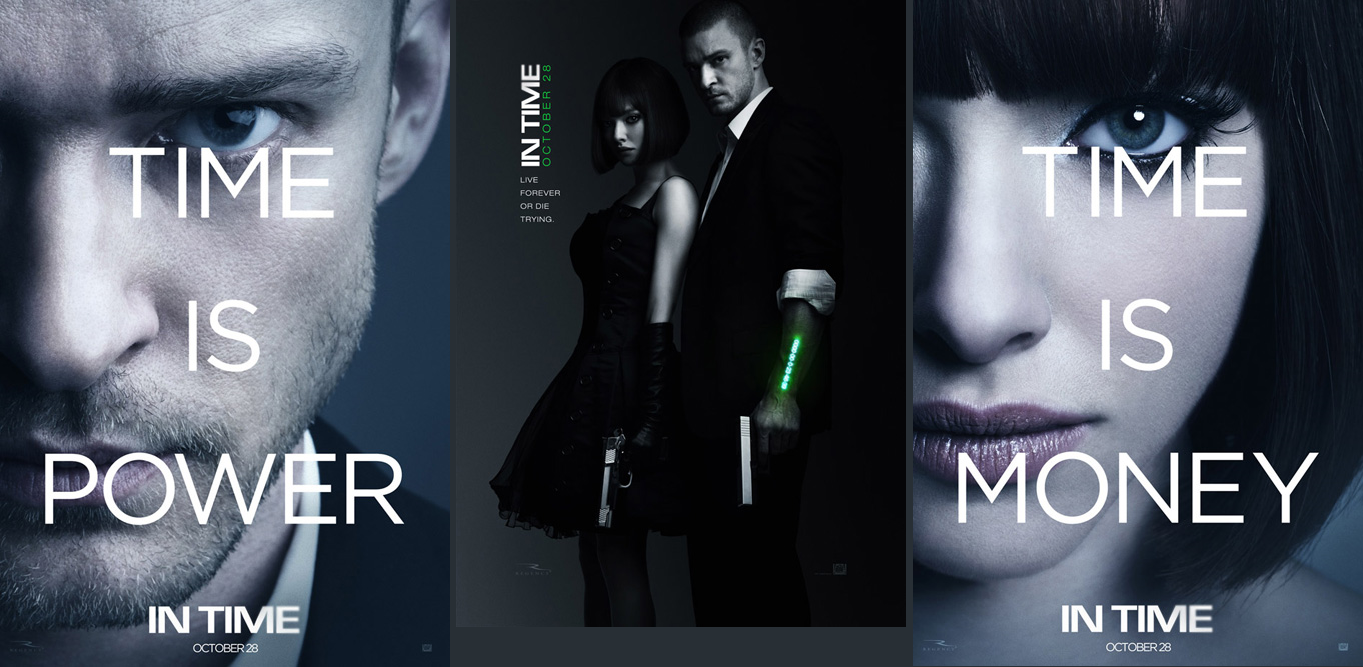
3. If you were given a timeline/future history of your life to come would you ignore it or take it into consideration throughout the rest of your life mapped out? If you would ignore, why? If you take it in, would you try and change things throughout your life knowing what's coming? Or is the future inevitable and can't be changed? Why? - Marcus
4. From Emily Wilson's ten criticisms of Socrates, ranging from the "chatter-box" to the rationalist thinking, which do you think is the worst criticism he has brought on to himself? (what is the #1 thing wrong with Socrates) - Armen
5. Who do you believe is the evil genius is our society/world? - Bianca, Stefanos
6. When God created Adam and Eve, he gave them free will, allowing Adam (and Eve) to sin. In heaven, there is supposed to be no sin, pain, sadness - everything is supposed to be perfect. Does this mean that there is no freedom in heaven? - Jules
7. When we talk about evil/wrong/bad in class, we talk about murder or nuclear bombs or diseases, but I don't think we have ever talked about whether some things are only a little bad, or if one thing is more wrong than another. Is there more than one degree of evil/bad? Can something be percieved as only a little evil/bad? For example, some people believe that smoking marijuana is bad, just like killing someone is bad. Could "bad" have more than one definition? - Olivia
8. Is your generation going to be different than previous ones? Will your generation change the world? If yes (to either), how so? How will your upbringing play a role in your generation’s actions? Is the generation headed in the right direction? - Jake P.
9. How come religion was such an important part of people’s lives a few centuries ago and is now “less important”? Do people have more doubt? Or is there something else? - Laetitia
10. Is death the end of everything or is there a soul that continues to exist after death? If so, is the soul immortal? - Sam T., Ben
11. Technology and other scientifical advantages seem to further divide religion and science. One example is Darwinism/evolution. What is another example that we may or may not have studied? - Sammy V., Stephen

12. How can you be sure that you are real and the people around you are real, if you can't trust your senses? - Irina, Jake P., Stefanos, Raphy
13. If you argue that man has no soul, what makes man want to be kind and love others?; If you argue man has a soul, where in the body is it? Does it have a place in the heart or in the mind? Maybe in the foot...? - Dayna
14. Do you believe that history could truly be manipulated like it was in George Orwell's 1984? - Jules
15. Spinoza’s philosophy claims that our world is deus sive natura, or “either Nature or God”, but how can it possibly be a question of either? It seems to me that either both exist, or neither exists. If only God exists, then he is malevolent in making a false nature that we perceive, and if only nature exists, then how could it have been created? - Claire
16. If we do, in fact, come into this world with “tabula rasa” do you think that eventually everyone ends up with the same general concepts on their slate or is what ends up on the slate determined by the individual? - Jessie
17. Given the recent intentional plane crash of an angry man into an IRS building (that killed one IRS agent) in Austin, TX, should the definition of a terrorist be redefined? In your own words what is a terrorist? Do you think the definition of terrorist changed over time? A

nd what separates a terrorist from a freedom fighter or a martyr? - Moose
18. Which era do you believe was most significant in coming up with discoveries and ideas? (Rationalism, Empiricism, Enlightenment, or Romanticism?) - Stefanos
19. At what point does life end? At what point does life begin? If we define life as ending when the heart stops, then should we define life as beginning when the heart begins to beat or when the child is born? If we define life as beginning with the first heartbeat, is it ridiculous to label the mother a murderer during a stillbirth or would that be total heresy? - Eric S.
20. Is philosophy a waste of time since the meaning of life cannot truly be found? - Dayna
21. What makes someone a “philosopher?” Is it a way of thinking? Does it require a certain level of intelligence or understanding? Or is it something anyone is capable of doing if they truly set their mind to it? - Jessie

22. How have movies, especially horror and mystery movies, influenced our perception of reality? Have movies sometimes made you question reality and made you think about whether things are real or not? - Richard
23. Is dialectic materialism a circle? Since I saw the timeline of cultures affected by each other on our Marxism notes I have wondered if the process is linear. There has to be a limited amount of ideas so they would have to repeat themselves once in a while, but perhaps the amount is so vast that that is not possible. Or does it have an end like Marx says at which Communism is the end point? - Claire
24. What makes us think we can trust our senses? Explain. - Richard, Jake T.
25. Why is Darwin being placed in a philosophy book with men that pondered where we came from and questions that can’t be answered while his theories are based off of data and facts? - Lisa
26. Have the philosophers discussed in class changed your views on life at all? How so? - Megan
27. Do you believe that each person has one true love that they are destined to find, or that there are multiple true loves for each person? - Sara D.
28. Do people need to have faith in a higher power, or anything for that matter, to be successful in life? - Amanda
29. Society has many laws, rules, regulations, and consequences for those who don't follow them. Do you think that people derive the sense of right and wrong from these laws, rules, regulations, and consequences, or sentiment and feelings that Hume suggest? - Raphy
30. Would you drink the cool-aide? If someone presented you with a drink that could make you meet the eternal god and, guarantee you passage into heaven, would you drink it? It’s like would you press the button for a million dollars? Can we believe what we hear, do we hear the truth, or do we inherently believe what we want to hear? - Eric S.
31. The author of Sophie’s World appears to have a fanatic obsession with romantic irony. The fact that he is constantly reminding us every chapter about how he is in fact simply writing a book about a man who is writing a book about characters that may actually exist in the fantasy world that he (the author) has created proves this statement. My question is, why has the author gone to such great lengths with his use of romantic irony? What does it achieve for the novel? - Tyler F.
32. Do you believe the theory of evolution disproves the existence of God or does God and Darwin's theory of evolution go hand in hand? - Stephen
33. Was G-d or a higher power created in man's image? Why or why not? - Amanda
34. Communism has never been achieved in any country. Do you think that it’s the actual process/idea of communism that is flawed or the nature of mankind that is flawed that prevents the idea from working? - Annie, Tyler F.
35. Can there be perfection outside of situations in which there is a clear definition of what it means to be perfect? i.e. Bowling the perfect game - 300! - Sam G.
36. Do you believe that the average American is intelligent? - Jake T.
37. Freud said that "we have unconscious drives that can affect our actions without us knowing about them." Do you agree or disagree? Why or why not? - Alesia
38. Can anything be infinite? (you have an infinite number of numbers between 1 and 2, and an infinite number of numbers between 2 and 4. are there twice as many numbers between 2 and 4 than there is between 1 and 2??) Why or why not? - it doesn't even have to apply to numbers. - Ben
39. If you assume that the universe is expanding, do you believe that it is expanding into something? Why or why not? - David M.
40. Does the idea of hell or a punishment seem reasonable with a just God? Why or why not? - Colin
41. As humans we are so needy, in this day and age technology is at all time high. Do you think people like Amish people have an advantage even though they are without, them being less depend it on the things we consider a necessity. Why or why not? - Alyssa T.